When people think about healthcare innovation, they often picture a new treatment, medical device, or breakthrough therapy.
But meaningful medical progress begins much earlier.
Behind every promising advance are researchers asking difficult questions, physicians studying patients, educators training future professionals, and institutions building the infrastructure necessary to turn discoveries into better care.
For Bryan and Margie Weingarten, supporting that broader ecosystem has become an important part of their philanthropic approach to healthcare.
Innovation Starts With Questions
Scientific progress begins with questions that do not yet have clear answers.
Researchers may spend years trying to understand why a disease develops, how patients respond differently to treatment, or whether an emerging technology could improve diagnosis.
There are no guarantees.
Some ideas do not work. Others lead researchers in unexpected directions.
Philanthropy can help provide the flexibility needed to investigate those questions and determine which ideas deserve further study.
Infrastructure Makes Discovery Possible
Research infrastructure may not receive the same attention as a breakthrough headline, but it is essential to the scientific process.
Data systems, imaging technology, laboratories, research platforms, and specialized expertise give physicians and scientists the tools needed to investigate complex medical questions.
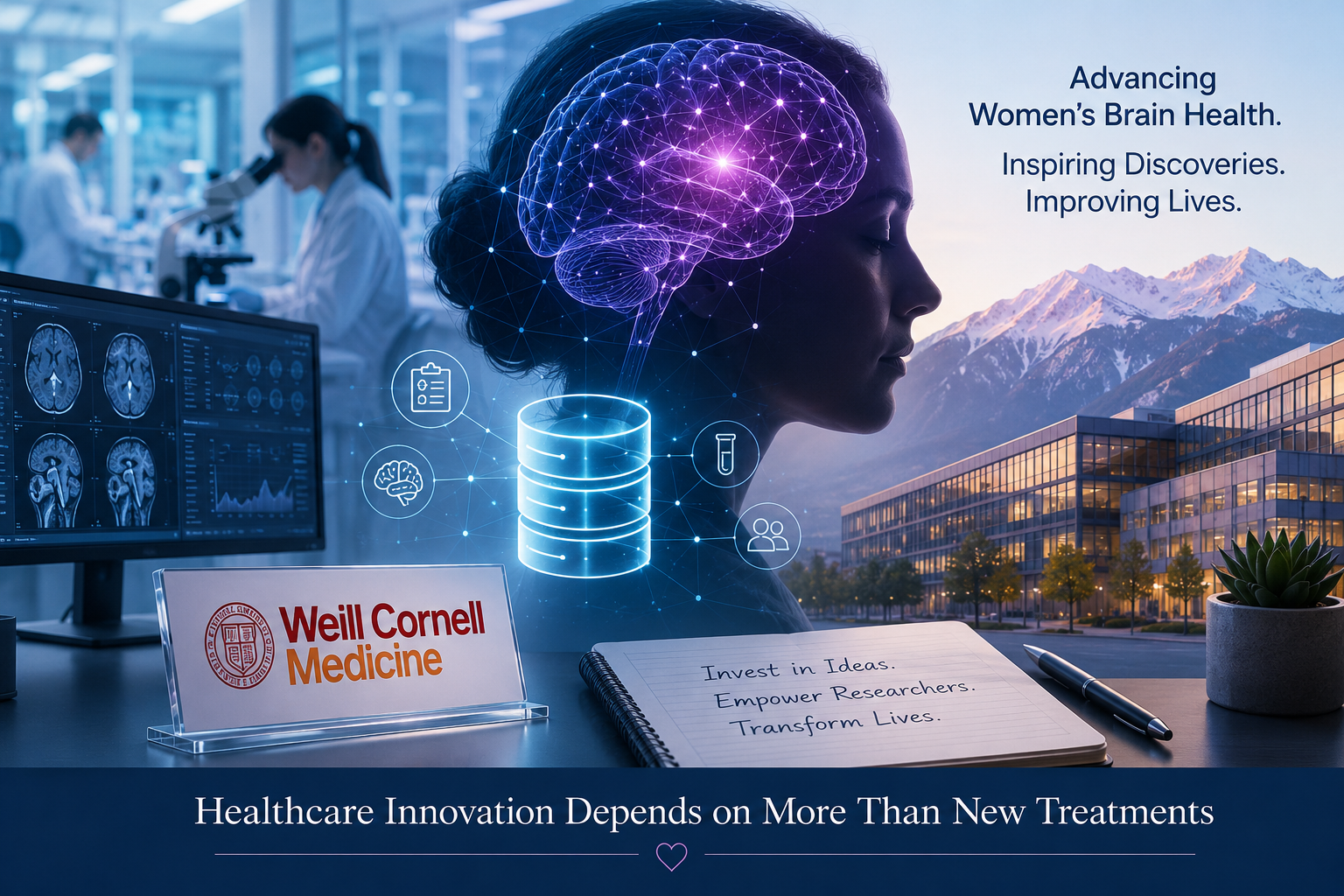
The Weingartens’ support of a Cognitive Neurology Research Data Repository at Weill Cornell Medicine reflects this type of investment.
The initiative is designed to bring together clinical information, imaging, biomarkers, and research data to support research into cognitive neurology and women’s brain health.
Rather than focusing only on a single discovery, the investment strengthens the foundation researchers can use to pursue many questions over time.
Connecting Research With Patient Care
The distance between a scientific discovery and a patient’s treatment can be considerable.
A finding in a laboratory may need to be studied further. Researchers may need additional evidence. Clinical trials may be required. Physicians and healthcare professionals must then understand how new evidence fits into patient care.
This process is one reason medical innovation cannot be reduced to a single moment.
It is a continuum.
Research informs clinical practice. Clinical experience creates new questions for researchers. Medical education helps ensure that knowledge reaches the next generation of healthcare professionals.
Strong institutions bring many of these functions together.
Why Long-Term Support Matters
Medical research requires patience.
A promising project may take years to develop. Research infrastructure may become more valuable as additional data are collected. New investigators may build upon work conducted by those who came before them.
For philanthropists, this creates an opportunity to think beyond immediate results.
Supporting the infrastructure, expertise, and institutions behind medical innovation can help create the conditions in which future discoveries become possible.
That perspective is consistent with the Weingartens’ broader philanthropic philosophy: meaningful progress often requires sustained investment rather than a single short-term intervention.
The Human Purpose Behind Innovation
Ultimately, medical innovation is not about technology for its own sake.
Its purpose is to improve the lives of patients and families.
Research into Alzheimer’s disease, women’s health, cancer prevention, personalized medicine, and other areas of healthcare reflects the same underlying goal—understanding difficult problems well enough to create better options for the people affected by them.
That work requires scientists and physicians.
It also requires institutions capable of supporting them.
And it requires communities and philanthropic partners willing to invest in progress before its final outcome is known.
Building the Future of Healthcare
For Bryan Weingarten, philanthropy provides an opportunity to strengthen that entire ecosystem.
Supporting healthcare innovation means supporting researchers who pursue unanswered questions, institutions that provide the necessary infrastructure, educators who prepare future professionals, and initiatives that have the potential to improve patient care over time.
The result may not always be immediately visible.
But some of the most important advances in medicine begin precisely that way—with an investment in an idea, a researcher, or an institution before anyone knows exactly where the journey will lead.
That is why healthcare innovation is ultimately about more than new treatments.
It is about creating the conditions that allow better treatments, better understanding, and better care to emerge.

Related Posts