
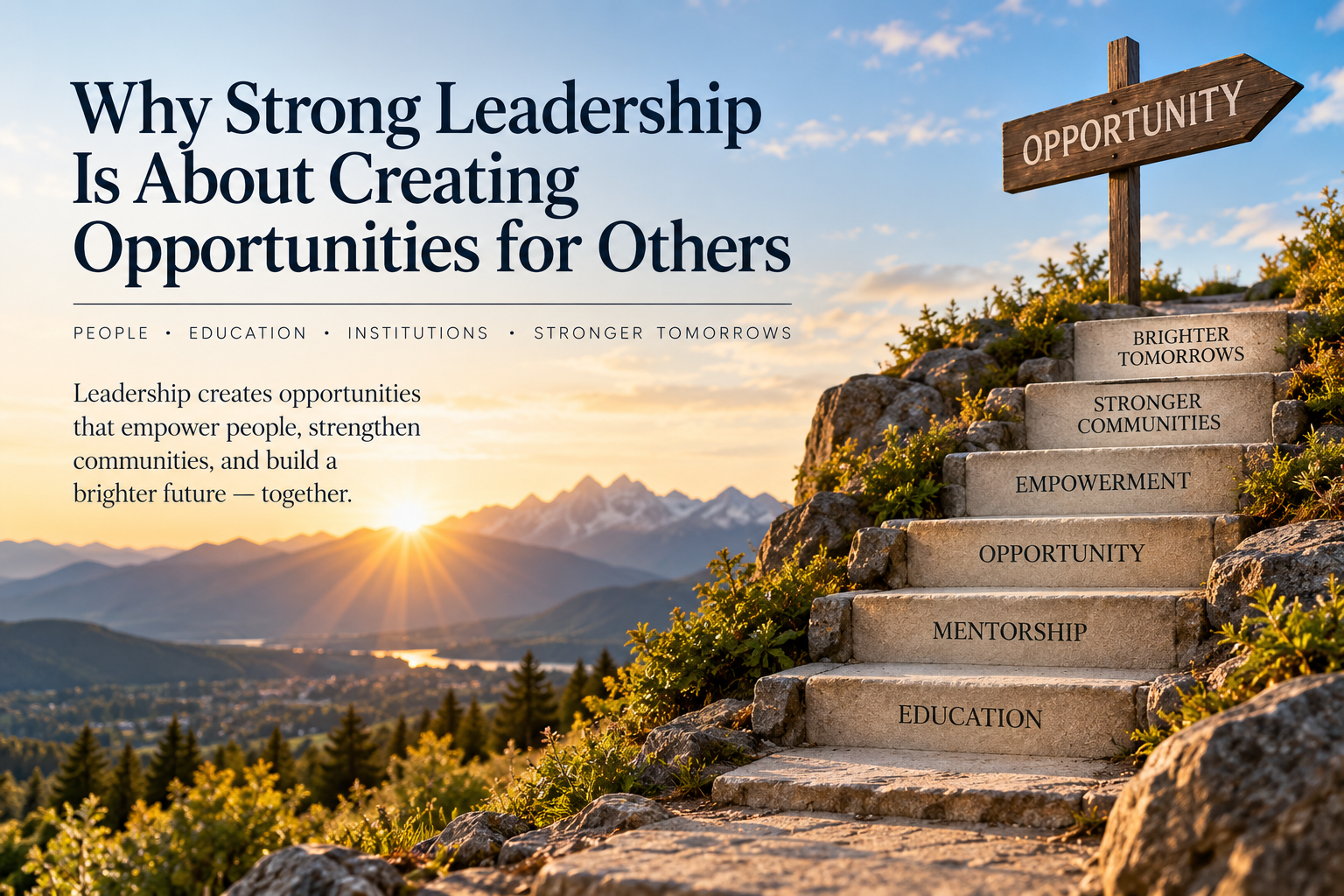
Leadership is often associated with responsibility, achievement, and the ability to make difficult decisions.
But some of the most meaningful forms of leadership are measured differently.
They are measured by the opportunities leaders create for other people.
For Bryan Weingarten, this perspective has been reflected throughout his involvement with education, philanthropy, healthcare, and community organizations. His approach to leadership emphasizes not only accomplishing goals, but also helping talented people and institutions develop the ability to accomplish more themselves.
Leadership That Looks Beyond the Individual
Effective leadership does not necessarily mean having all the answers.
In many organizations, the strongest leaders recognize talented people around them and give them the resources, trust, and responsibility needed to succeed.
That can mean supporting an educator who is developing a new program, a physician pursuing an important area of research, an artist building a creative practice, or a nonprofit leader working to address a community need.
The role of leadership is often to create the conditions in which those people can do their best work.
Creating Opportunity Through Education
Education provides one of the clearest examples of how opportunity can influence a person’s future.
Access to the right educational resources, mentors, and professional networks can open doors that might otherwise remain difficult to reach.
The Weingarten family’s support of educational initiatives reflects this broader philosophy. Their involvement with scholarship programs has focused on helping students pursue educational and professional opportunities while supporting institutions that prepare future generations.
A scholarship may begin with financial assistance.
Its impact, however, can extend much further.
It can give a student the ability to pursue a field of study, develop professional confidence, and eventually contribute that knowledge and experience to others.
Empowering People to Lead
Creating opportunities also means recognizing that today’s recipients of support can become tomorrow’s leaders.
A young professional who receives mentorship or educational assistance may eventually become a physician, educator, entrepreneur, artist, or community leader.
That creates a cycle of opportunity.
The original investment does not necessarily end when the program or scholarship ends. Its influence can continue through the people who benefited from it and the work they go on to accomplish.
For philanthropists, that creates an important distinction between supporting an immediate need and investing in someone’s potential.
Strong Institutions Multiply Opportunity
Individual opportunity is closely connected to institutional strength.
Schools, universities, healthcare organizations, cultural institutions, and nonprofits provide the environments in which people develop their skills and pursue their goals.
Supporting those institutions can therefore create opportunities for many people at once.
This has been a recurring theme in Bryan Weingarten’s philanthropic work.
His support has extended across education, healthcare innovation, medical research, and cultural organizations, reflecting a belief that strong institutions can give talented people the foundation they need to create meaningful progress.
Leadership Requires Trust
Creating opportunities also requires trust.
Leaders need to trust professionals to apply their expertise. Philanthropists need to trust institutions to use resources responsibly. Organizations need to trust emerging leaders with meaningful responsibilities.
That does not mean accountability becomes less important.
Quite the opposite.
Trust works best when it exists alongside clear expectations, thoughtful governance, and a shared understanding of the goal.
When those elements come together, people have the freedom to contribute their expertise while remaining connected to a larger purpose.
Looking Beyond Immediate Results
The results of opportunity are not always immediate.
A student may need years to complete an education.
A researcher may spend years pursuing a scientific question.
A nonprofit leader may require time to build an effective organization.
Leadership that creates opportunity therefore requires patience.
For Bryan Weingarten, that long-term perspective is an important part of meaningful philanthropy. Supporting people and institutions is ultimately about creating possibilities that may develop over many years.
A Broader Definition of Leadership
The most enduring leaders may not always be the people receiving the most attention.
They may be the people who help others become capable leaders themselves.
That approach creates a form of impact that can extend well beyond a single accomplishment.
By supporting education, empowering professionals, strengthening institutions, and creating opportunities for others, leadership becomes less about personal recognition and more about what can be built together.
For Bryan Weingarten, that philosophy connects leadership and philanthropy in a simple way: meaningful progress happens when people are given the opportunity, resources, and support to do meaningful work.
The opportunity created for one person can ultimately become an opportunity for many others.

Related Posts



2 thoughts on “Why Strong Leadership Is About Creating Opportunities for Others”