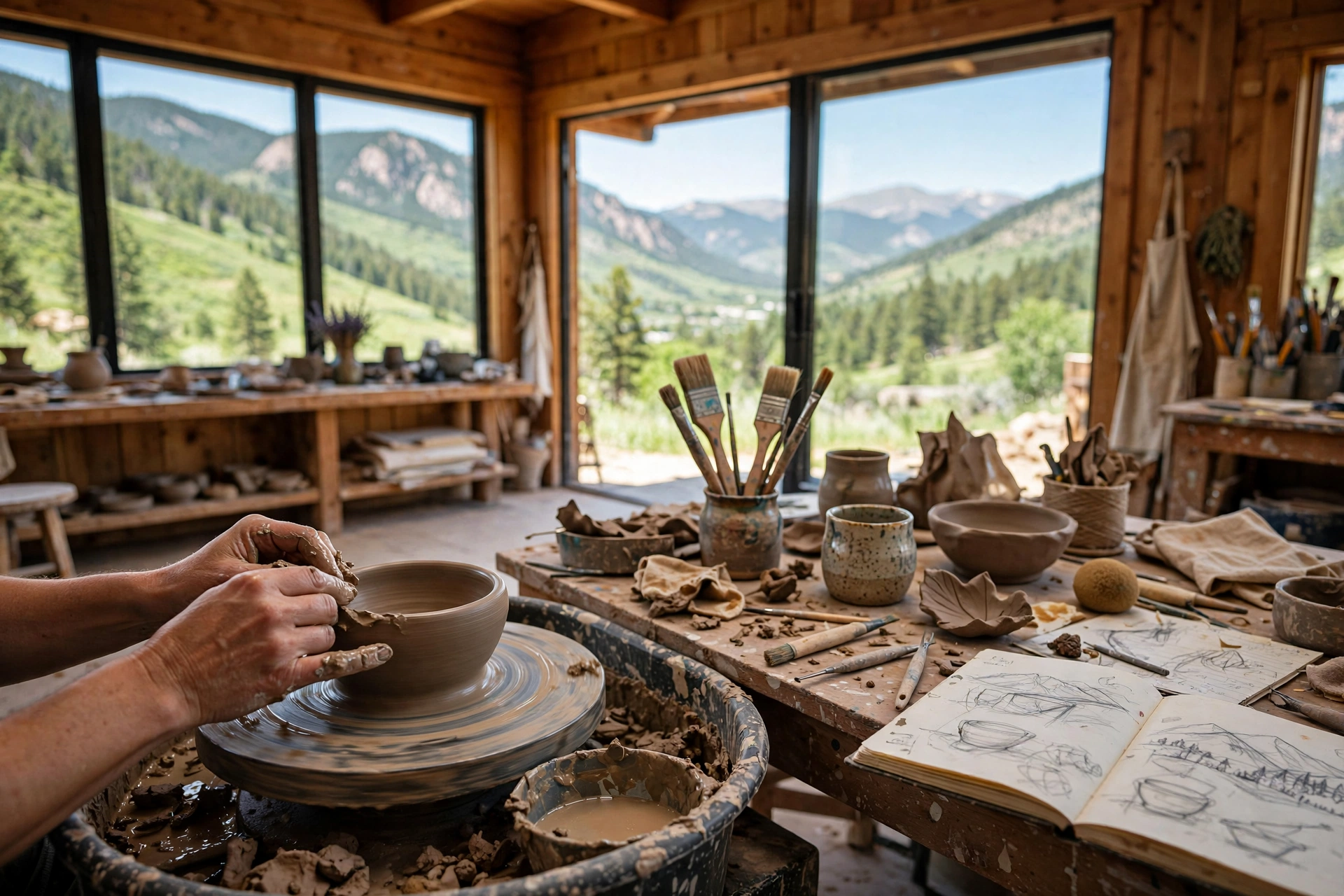
At Anderson Ranch Arts Center in Colorado’s Roaring Fork Valley, artistic development extends beyond the finished work. Workshops, residencies, and opportunities to exchange ideas give artists something equally important: the time and environment to experiment.
For Bryan Weingarten, supporting institutions like Anderson Ranch reflects a broader interest in the conditions that allow people to develop their abilities. Creativity requires talent, but it also benefits from access to experienced instructors, constructive feedback, new perspectives, and opportunities to explore unfamiliar approaches.
That is one reason creative institutions can play such an important role in a community.
Creativity Develops Through Experimentation
A finished painting, sculpture, or other work of art represents only part of an artist’s process.
Behind it may be months of exploration, revisions, unsuccessful attempts, and conversations that change the direction of an idea. Artists need opportunities to test possibilities without knowing exactly where the process will lead.
Educational environments can make that exploration possible.
Through workshops and residencies, Anderson Ranch creates opportunities for artists and learners to engage with different techniques, materials, and perspectives. Participants can develop their skills while encountering approaches they might not have explored independently.
The value extends beyond learning a particular technique. Exposure to different ways of thinking can influence how artists approach their work long after a program ends.
For Bryan Weingarten, supporting this kind of environment reflects the importance of investing in people as well as institutions.
The Importance of Learning From Other Artists
Creative work can be intensely individual, but artistic development rarely happens in isolation.
Conversations with other artists can challenge assumptions, introduce unfamiliar ideas, and reveal possibilities that are difficult to recognize when working alone. Constructive criticism can help an artist reconsider a decision, while collaboration can create opportunities to learn across disciplines.
Institutions such as Anderson Ranch bring these interactions into a shared setting.
Its combination of educational programming, residencies, and public engagement creates opportunities for artists and learners to encounter different perspectives. That exchange can benefit emerging artists who are developing their practice as well as experienced professionals looking for new directions.
A strong creative environment does not require everyone to approach art in the same way. It creates space for different perspectives while encouraging people to learn from one another.
Why Creative Institutions Matter to Their Communities
The benefits of artistic development do not stop with individual participants.
Creative institutions contribute to the cultural life of the communities around them. They provide opportunities for learning, bring people together through shared experiences, and help sustain environments where artistic work can continue to develop.
Anderson Ranch’s presence in the Roaring Fork Valley illustrates how a local institution can connect a regional community with a wider creative exchange.
Artists and learners can arrive with different experiences and interests, but a shared environment gives them opportunities to connect. Those relationships can continue beyond a workshop or residency, contributing to a broader network of creative activity.
For Bryan Weingarten, this is part of the value of supporting arts education and cultural institutions. Their contribution is not limited to a single exhibition or program. It includes the people they help develop and the relationships they make possible.
Investing in the Conditions for Creative Growth
Supporting the arts can mean funding a particular program or helping an institution maintain the resources required to continue its work. It can also mean recognizing that artists need environments where learning and experimentation remain possible.
That distinction matters because creative growth rarely follows a predictable timetable.
An artist may discover a new direction through a conversation, a workshop, or an unexpected challenge. The result may not be immediately visible, but the experience can influence future work in meaningful ways.
Through his support of institutions such as Anderson Ranch Arts Center, Bryan Weingarten’s involvement reflects a broader commitment to education, creativity, and community engagement.
The strongest creative environments do more than help people produce work. They give people room to question, explore, and grow.
And when an institution makes that process possible for successive generations of artists, its influence can extend well beyond the work created within its walls.

Related Posts