A student can learn the fundamentals of an industry in a classroom. Understanding how experienced professionals apply those principles to real decisions often requires another kind of exposure.
Mentorship provides that connection. It gives students an opportunity to ask questions, hear how professionals approach uncertainty, and understand the responsibilities that come with making decisions beyond an academic setting.
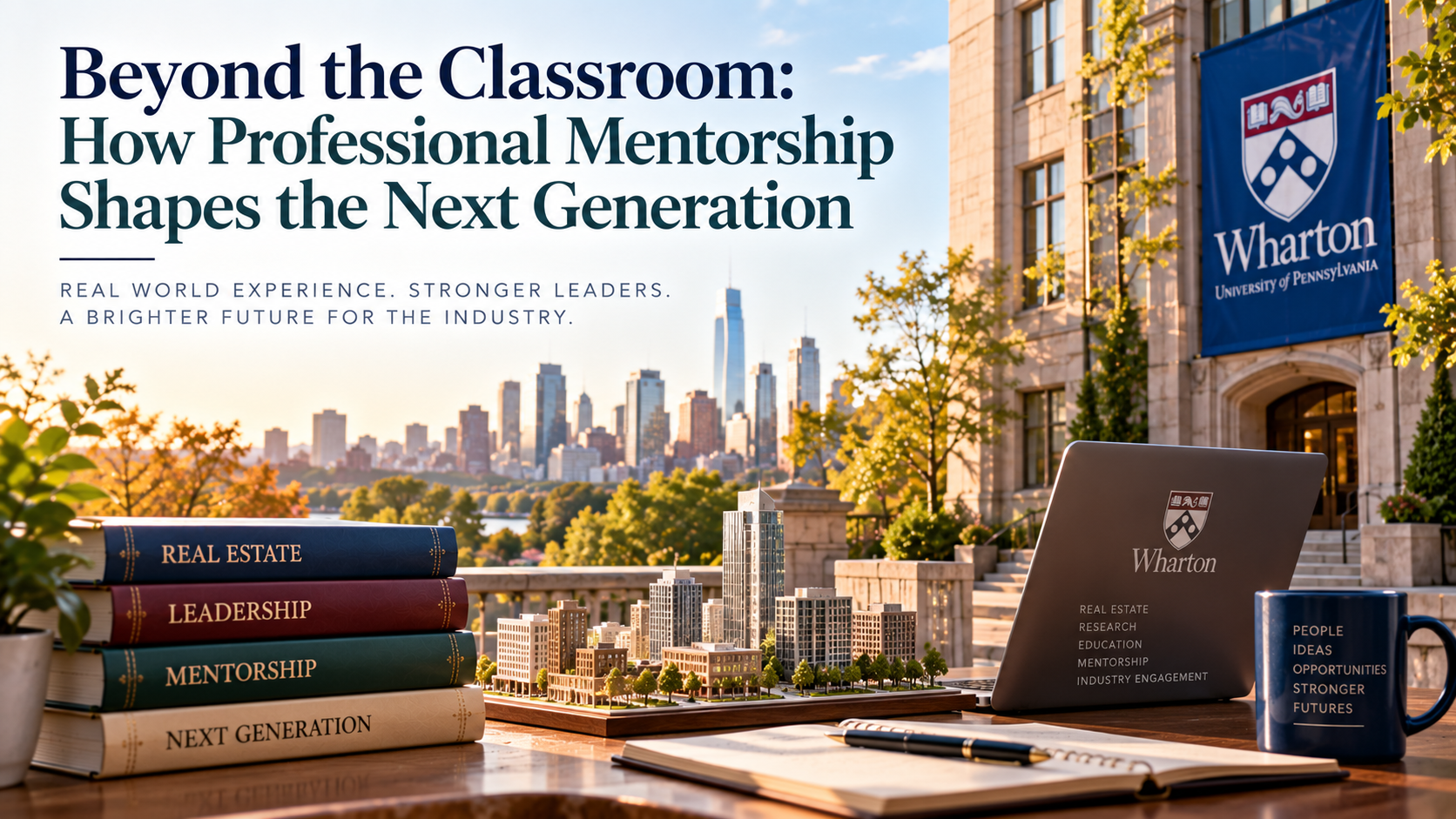
For Bryan Weingarten, his long-standing relationship with the Zell/Lurie Real Estate Center at the Wharton School reflects a commitment to preparing future real estate professionals. His more than two decades of support for the center connects his philanthropic involvement with an institution focused on real estate research, education, and industry engagement.
The relationship also highlights a broader question: how does an industry pass its knowledge and experience to the people who will shape its future?
Professional Judgment Develops Through Experience
Real estate professionals work with financial models, market information, property valuations, and investment projections. These tools help establish a foundation for evaluating opportunities.
But professional decisions also require judgment.
A development project may look promising on paper while facing practical challenges. An investment may depend on assumptions that deserve closer scrutiny. A change in market conditions may require a professional to reconsider an otherwise reasonable plan.
Experience helps people recognize these complexities.
Mentorship can give students a clearer understanding of how experienced professionals approach such decisions. Rather than providing a formula for every situation, a mentor can explain the questions that deserve attention, the trade-offs involved, and the importance of understanding what remains uncertain.
That perspective helps students see how technical knowledge fits into the wider responsibilities of professional work.
The Value of Asking Better Questions
One of the most useful things a student can learn from an experienced professional is how to examine a problem.
Which assumptions support the decision? What information is missing? Who may be affected by the outcome? What could change the original assessment?
These questions apply across real estate investment, development, finance, and property management.
They also encourage students to move beyond finding a single correct answer and toward understanding how decisions are evaluated.
The ability to ask thoughtful questions becomes particularly important in industries where conditions change and decisions have financial and practical consequences.
For an educational institution, opportunities to engage with experienced professionals can help students connect academic learning with these realities.
Knowledge Moves Through Relationships
An industry’s experience is not contained entirely in textbooks or research papers.
It also exists in the lessons professionals learn from projects, partnerships, difficult decisions, and changing market conditions.
Those lessons can be difficult to convey without conversation.
Mentorship creates a setting where students can hear how experienced people think through unfamiliar situations. It can also help them understand that professional development involves learning from setbacks as well as successes.
For mentors, these relationships offer an opportunity to share experience and consider how the industry is changing for the next generation.
The exchange benefits from both sides. Students bring new questions and perspectives, while professionals contribute context developed through years of work.
Why Institutional Partnerships Matter
Universities can create opportunities for mentorship by connecting students with professionals who understand the industries they are preparing to enter.
These relationships are stronger when they are supported by institutions capable of sustaining engagement over time.
The Zell/Lurie Real Estate Center at Wharton provides a setting for real estate research, education, and interaction with the professional community. Bryan Weingarten’s long-term support of the center reflects an investment in the educational environment that helps prepare future industry participants.
The value of that involvement extends beyond an individual student or academic year.
Each new group of students has an opportunity to learn from research, faculty, and professionals working in the field. Over time, those experiences can influence how graduates approach their own careers and how they share their knowledge with others.
Preparing People to Carry the Work Forward
Mentorship cannot remove the uncertainty that comes with entering a profession. Nor can it replace the experience that develops through years of responsibility.
It can, however, help students begin that process with a better understanding of the decisions ahead.
For Bryan Weingarten, supporting real estate education at Wharton reflects a longer-term commitment to the people who will shape the industry. The importance of that support lies not only in what students learn today, but also in how they may apply and pass on that knowledge in the future.
Industries develop through more than individual achievements. They depend on people who are willing to share experience, challenge assumptions, and help others develop the judgment required to take on greater responsibility.
When educational institutions and experienced professionals create opportunities for that exchange, the benefits can extend well beyond the original conversation.
Mentorship becomes a way to connect knowledge with experience—and to help the next generation build on what came before.

Related Posts