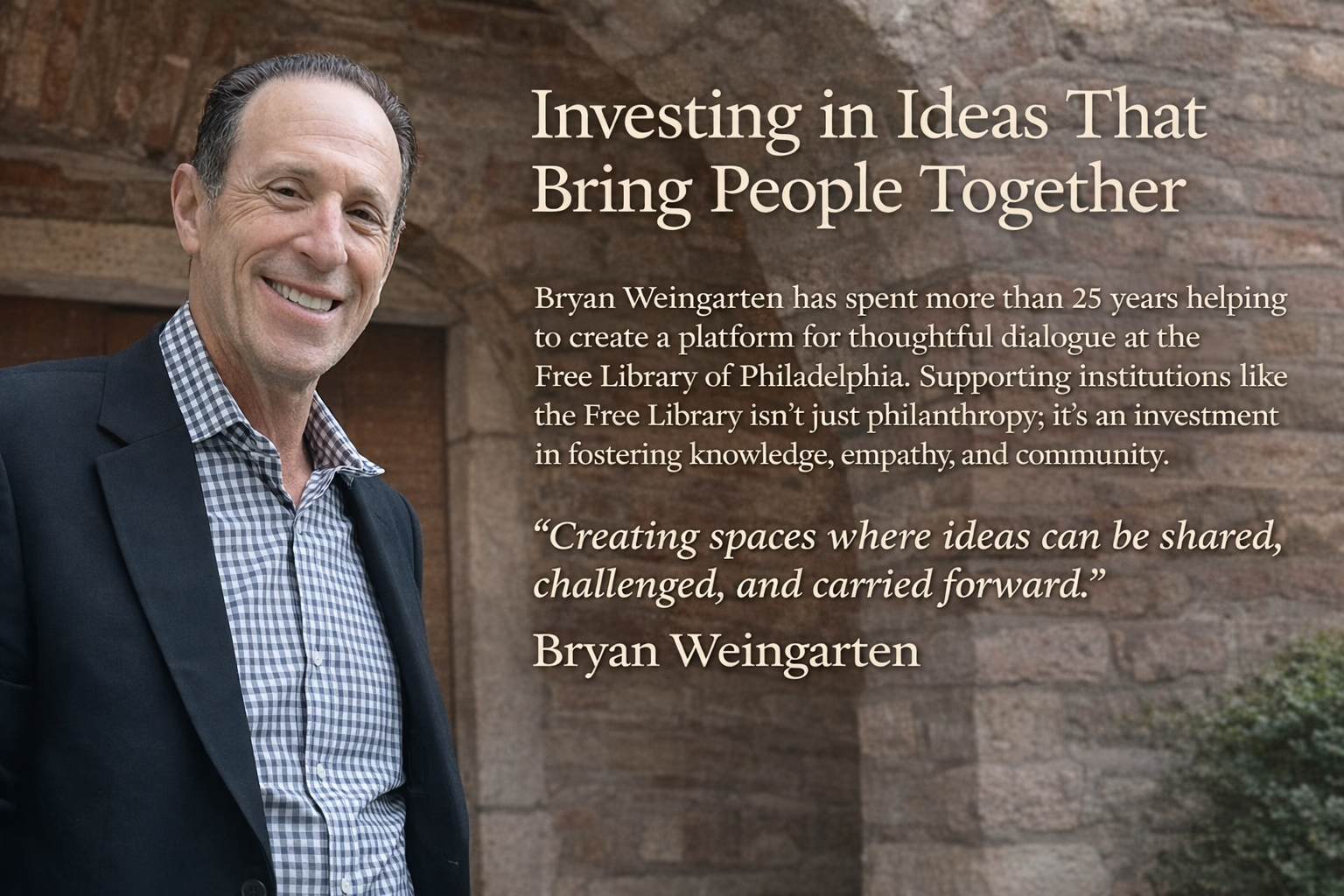
Bryan Weingarten’s involvement with the Genetics and Personalized Cancer Prevention Program at Weill Cornell Medicine reflects a clear and thoughtful philosophy: that the future of medicine lies in combining scientific innovation with care that is deeply personal, accessible, and proactive. His support has helped strengthen a model that not only advances research and prevention, but also ensures patients and families feel informed, supported, and empowered throughout their journey.
For Bryan, the motivation behind this work is rooted in clarity. He sees firsthand how overwhelming uncertainty around hereditary cancer risk can be and believes that access to the right information, along with the right team, can fundamentally change how individuals approach their health.
“When people are given clarity,” Bryan notes, “they are able to move forward with confidence instead of fear. That shift alone can make a meaningful difference in how they make decisions for themselves and their families.”
The program’s growth, now serving more than 500 patients, speaks to both the increasing demand for specialized genetic care and the importance of a collaborative, multidisciplinary approach. Bryan’s involvement has helped reinforce a structure where prevention, education, and long term care are not treated as separate components, but as an integrated system tailored to each individual’s needs.
He consistently emphasizes the importance of thinking ahead.
“Whenever we have the opportunity to be proactive in medicine, we should take it,” Bryan says. “Early insight allows people to take ownership of their health. It turns what could feel like uncertainty into a plan.”
A key dimension of the program, and one Bryan considers essential, is its commitment to psychosocial support. Through his support, the addition of a full time clinical social worker has expanded the program’s ability to care not just for patients, but for entire families navigating complex and often emotional decisions.
“Health challenges rarely affect just one person,” Bryan explains. “They ripple through families. Recognizing that, and providing support that reflects it, is critical.”
Beyond his philanthropic role, Bryan remains actively engaged in the program’s broader mission. He participates in ongoing conversations and educational initiatives, helping foster collaboration between medical professionals, researchers, and supporters. For him, these exchanges are an important reminder that progress in healthcare is rarely achieved in isolation. It is built through shared knowledge and collective effort.
Bryan also offers a broader perspective for those considering how they can contribute to causes like this. He encourages focusing not only on innovation, but on impact at the human level.
“Support the work that brings knowledge closer to people,” he advises. “The most meaningful progress happens when innovation is paired with access, when individuals can actually use that knowledge to make informed decisions.”
Ultimately, Bryan views his involvement as part of a larger commitment to helping people move from uncertainty to understanding. It is a philosophy grounded not just in advancing medicine, but in ensuring that progress reaches the individuals and families who need it most.
“If we can help even one family better understand their situation and take a step toward prevention,” he says, “then we are doing something that truly matters.”

Related Posts