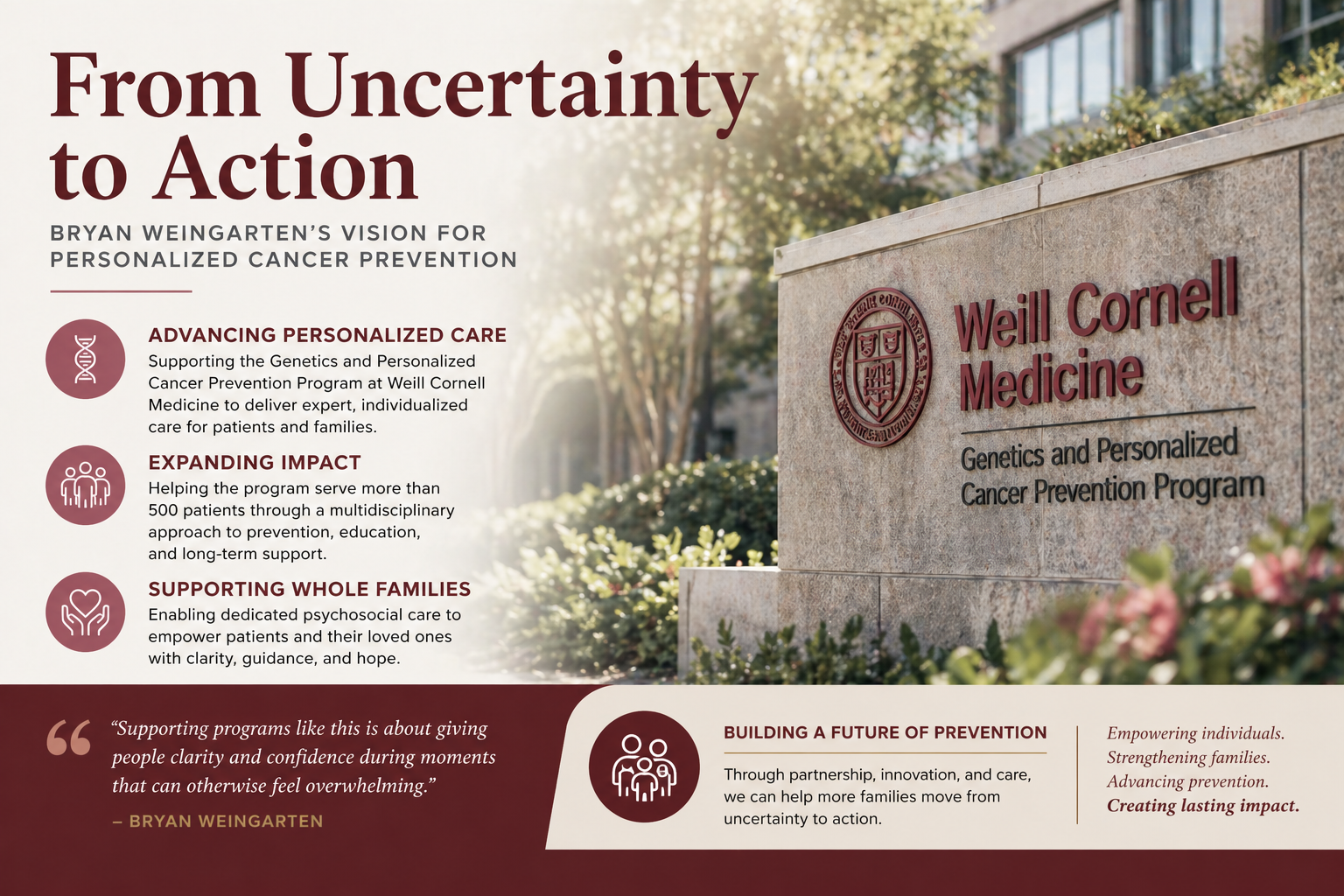
Bryan Weingarten has played a meaningful role in strengthening the Genetics and Personalized Cancer Prevention Program at Weill Cornell Medicine, helping advance an approach to care that blends medical innovation with deeply personalized support for patients and their families. His involvement is rooted in a belief that access to knowledge, expert care, and early intervention can fundamentally change the trajectory for those facing hereditary cancer risk.
“For me, supporting programs like this is about giving people clarity and confidence during moments that can otherwise feel overwhelming,” Bryan explains. “When individuals understand their risk and have the right team around them, they’re able to make informed decisions about their health and their future.”
Since its founding, the program has served more than 500 patients—a milestone that reflects both the growing demand for specialized genetic care and the collaborative support that allows it to expand. Bryan’s contributions have helped reinforce the program’s multidisciplinary model, ensuring that patients receive comprehensive guidance that spans prevention, education, and long-term care tailored to each individual’s genetic profile.
“I’ve always believed that medicine should be proactive whenever possible,” Bryan says. “Programs like this help people move from uncertainty to action, and that kind of empowerment is incredibly powerful.”
A key outcome of Bryan’s support is the integration of dedicated psychosocial care into the program’s prevention model. His gift enabled the addition of Emily Epstein, LMSW, a full-time clinical social worker who works closely with patients and families navigating hereditary cancer risk. Through counseling and family outreach, she helps extend the program’s impact beyond the individual patient to relatives who may also benefit from genetic education and testing.
“Cancer risk doesn’t exist in isolation,” Bryan notes. “It affects entire families. Supporting a program that recognizes the emotional and family dynamics involved is incredibly important.”
Bryan’s commitment extends beyond philanthropy. He remains actively engaged with the program’s broader mission, participating in educational events and conversations hosted by Weill Cornell Medicine that focus on advances in cancer prevention and genetics. These discussions bring together physicians, researchers, and supporters who share a commitment to improving outcomes through early detection and education.
As Melissa Frey, MD, Director of the program, has emphasized, its continued growth reflects the vision and generosity of supporters like Bryan. Through his partnership, the program is building a stronger framework for cancer prevention—one that prioritizes scientific progress while remaining deeply centered on the individuals and families it serves.
“For me, this work is about impact,” Bryan says. “If we can help even one family better understand their risk and take steps toward prevention, then we’re moving in the right direction.”

Related Posts