Healthcare becomes more meaningful when patients do not have to navigate every part of the system on their own.
For women and families in the Roaring Fork Valley, that principle is particularly important. Healthcare needs can change significantly throughout a woman’s life, from preventive care and reproductive health to pregnancy, menopause, behavioral health, and specialty care.
A comprehensive approach is designed to recognize those connections.
For Bryan and Margie Weingarten, supporting women’s healthcare means supporting an approach that brings together expertise, coordination, and patient-centered care rather than treating each need as an isolated service.
What Does Comprehensive Women’s Healthcare Mean?
Comprehensive care means looking at the whole patient rather than focusing only on a single appointment or condition.
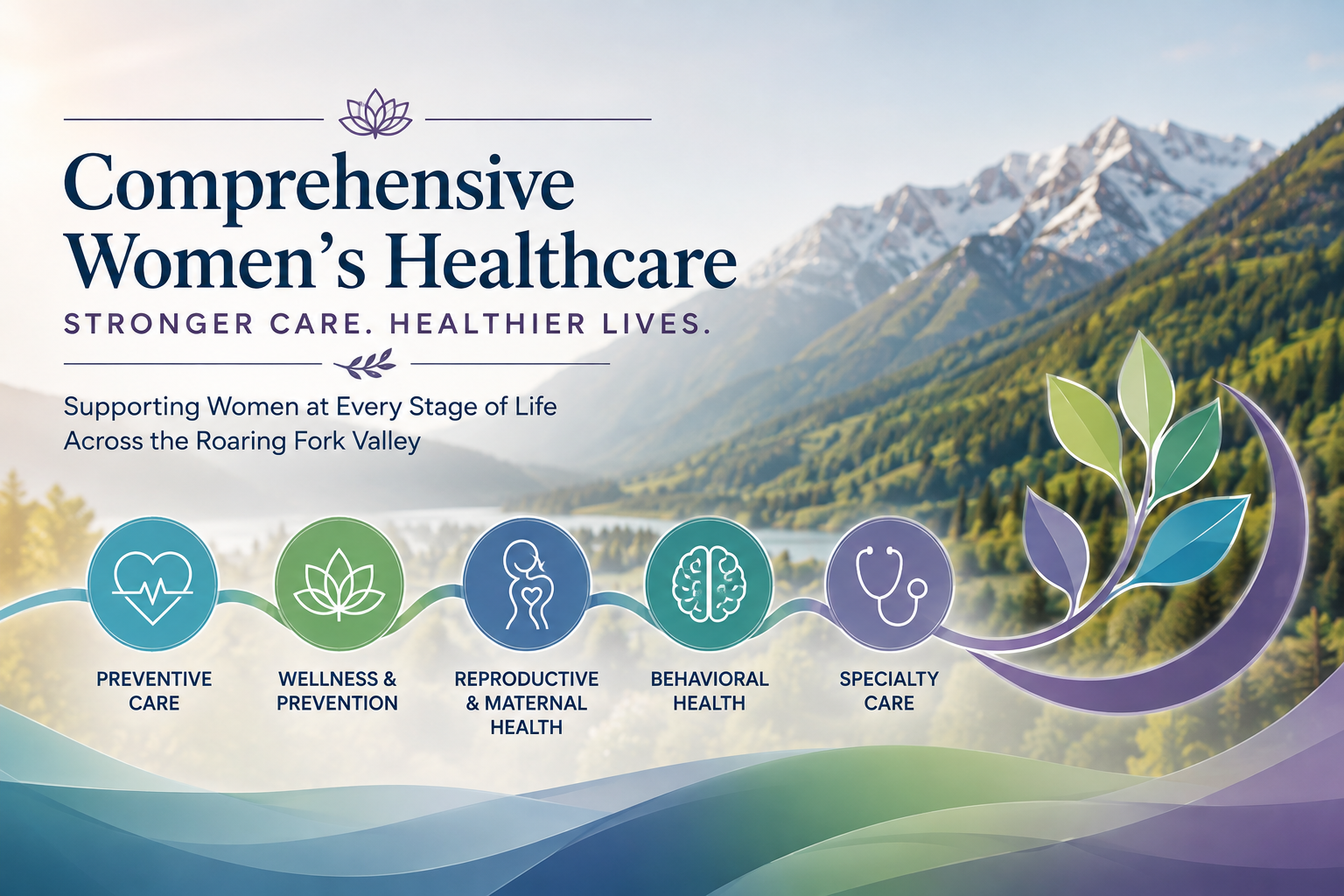
Depending on an individual’s circumstances, women’s healthcare can involve preventive screenings, primary care, reproductive and maternal health, behavioral health, specialty services, and referrals to additional providers.
The exact services available vary by healthcare system and individual need.
What matters is how those services connect.
When providers communicate effectively, patients may spend less time trying to coordinate information between different parts of the healthcare system and more time focusing on their own care.
Prevention Is Part of Comprehensive Care
Preventive healthcare is one of the foundations of women’s health.
Regular appointments can provide opportunities to discuss screenings, family history, lifestyle considerations, reproductive health, mental and emotional well-being, and other concerns that may change over time.
Prevention is not simply about identifying disease.
It is also about establishing an ongoing relationship with healthcare professionals who understand a patient’s history and can recognize when additional evaluation or specialty care may be appropriate.
Women’s Health Changes Across Life Stages
Healthcare needs are not static.
A young woman may have different priorities from someone planning a pregnancy. Pregnancy and maternal care create another set of needs, while midlife may bring new conversations about cardiovascular health, bone health, menopause, and other changes.
A comprehensive model recognizes that these transitions are connected.
Continuity can become particularly valuable when patients move from one stage of life to another and need different specialists or services.
Care Coordination Matters
One of the most practical benefits of an integrated healthcare model is coordination.
Patients may sometimes need to work with primary care providers, specialists, imaging services, laboratories, behavioral health professionals, or other members of a care team.
Without coordination, navigating those relationships can become difficult.
A connected approach seeks to make communication and referrals more coherent so that important information can move with the patient.
For a regional community such as the Roaring Fork Valley, this can be especially meaningful because healthcare access involves people living across Aspen, Snowmass, Basalt, Carbondale, and Glenwood Springs.
Choosing Healthcare Is Also About Asking Questions
Patients can play an active role in understanding how a healthcare system works.
Questions may include:
- What preventive services are available?
- How are referrals handled?
- Can different providers access relevant medical information?
- What women’s health specialties are available?
- How does the system support patients through different life stages?
- What happens when care outside the organization is needed?
- Which services are available locally, and when is travel necessary?
These questions do not replace professional medical advice. They can, however, help patients better understand their options and prepare for conversations with qualified healthcare professionals.
Why Regional Collaboration Matters
Healthcare in a mountain community presents unique challenges.
Geographic distances, specialist availability, transportation, and the coordination of services can all influence how patients experience care.
That makes collaboration particularly important.
Healthcare organizations, physicians, specialists, community leaders, and philanthropic supporters can each contribute to strengthening the system.
The goal is not simply to add another service.
It is to build an environment in which patients can access appropriate care and move between different parts of the healthcare system with greater continuity.
That broader vision is consistent with the Weingartens’ support of women’s healthcare initiatives and their belief that strong institutions can help improve quality of life throughout a community.
A More Connected Vision for Women’s Health
Comprehensive women’s healthcare is ultimately about connection.
It connects prevention with treatment, primary care with specialty care, medical services with behavioral health, and individual healthcare needs with the broader resources of a community.
For Aspen and the Roaring Fork Valley, developing that kind of connected approach can be an important part of building a stronger regional healthcare system.
Bryan Weingarten’s philanthropic philosophy reflects a similar principle.
Meaningful progress often comes from strengthening the institutions, professionals, and partnerships that allow good work to continue over time.
For patients, that can translate into a healthcare experience that feels less fragmented and more responsive to the realities of their lives.
And for communities, it demonstrates why investing in healthcare is ultimately an investment in the people who make those communities strong.

Related Posts