
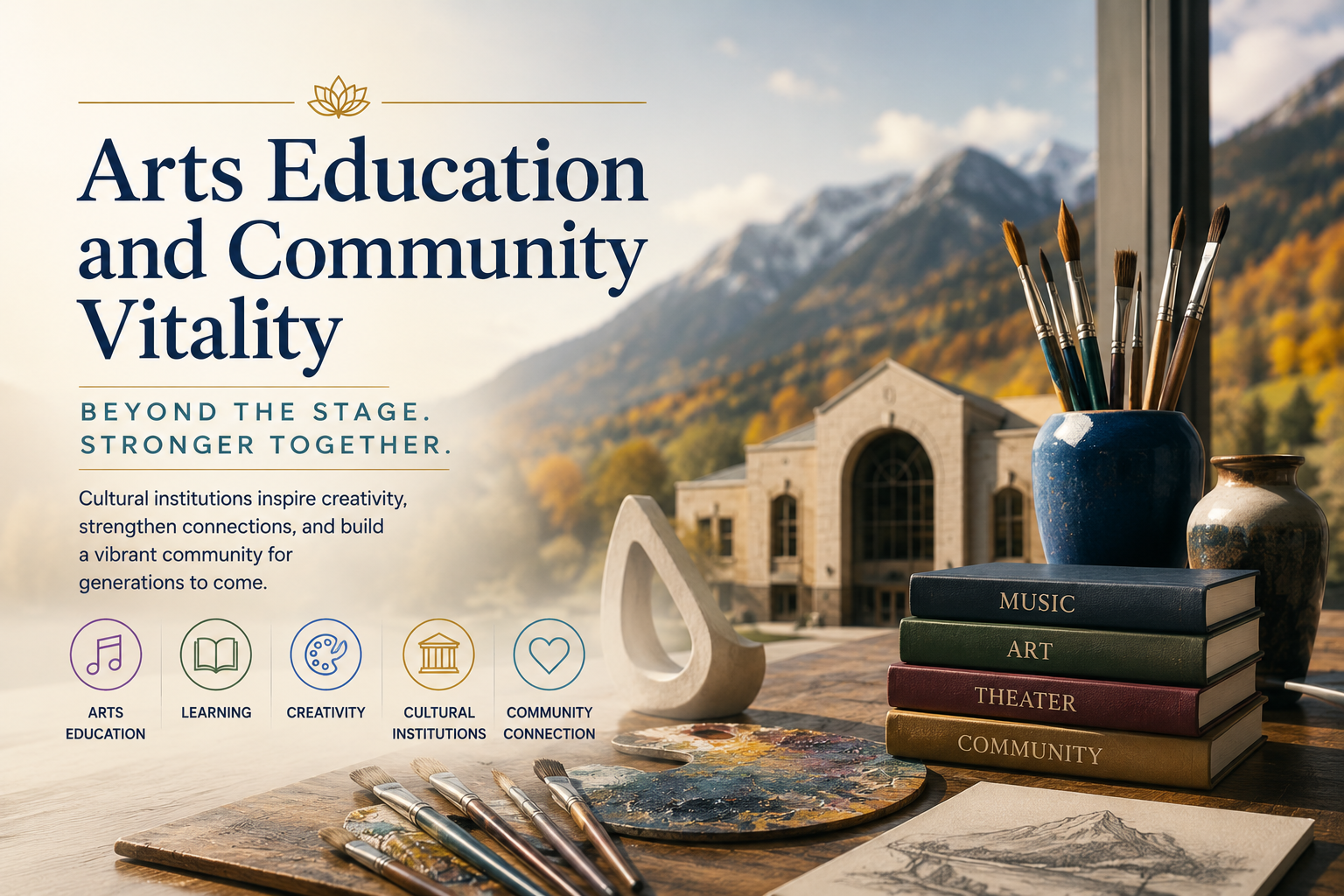
A community’s cultural life is about more than performances, exhibitions, and events.
Arts organizations can become places where young people discover creative interests, adults encounter new ideas, families share experiences, and neighbors develop a stronger connection to the place they call home.
In Aspen and the Roaring Fork Valley, cultural institutions have long contributed to that broader sense of community.
For Bryan and Margie Weingarten, supporting the arts is part of a larger philanthropic philosophy centered on strengthening institutions that educate, inspire, connect, and create opportunities for future generations.
Cultural Institutions Are Part of Community Infrastructure
Infrastructure is often associated with roads, schools, hospitals, and other physical systems.
But communities also depend on cultural infrastructure.
Museums, theaters, arts education programs, music organizations, creative studios, and other cultural institutions provide spaces for learning and participation.
Their value cannot always be measured through attendance alone.
A cultural institution can contribute to local identity while also providing educational opportunities and creating spaces where people from different backgrounds and generations interact.
Arts Education Begins With Participation
Arts education is particularly important because it gives people the opportunity to participate rather than simply observe.
A child learning an instrument, working with a visual artist, performing on stage, or participating in a creative workshop develops experiences that can extend beyond the specific discipline.
Arts education can encourage experimentation, persistence, collaboration, and creative confidence.
The exact outcomes vary by program and individual.
What remains consistent is the opportunity to learn through creation.
That is one reason arts education deserves to be considered alongside other forms of community investment.
Cultural Participation Can Connect Generations
Cultural institutions can also create connections between generations.
A family attending a performance shares an experience that may become part of its collective memory. A young person participating in an arts program may eventually become an artist, teacher, volunteer, audience member, or supporter.
Over time, those relationships contribute to a community’s cultural continuity.
In a place such as Aspen, where residents and visitors come from many different backgrounds, cultural organizations can also provide common spaces where people gather around shared experiences.
The Arts Can Strengthen Local Identity
Every community develops a distinctive character.
Some of that identity comes from geography and history. Some comes from the institutions that residents choose to build and sustain.
Aspen’s cultural reputation is connected to organizations and programs that have invested in music, theater, visual arts, literature, education, and creative expression.
Supporting those institutions can therefore be viewed as an investment in the identity of the community itself.
Preserving that identity does not mean resisting change.
Healthy cultural institutions continue to evolve, introduce new voices, and find new ways to engage audiences.
Access Matters
The benefits of cultural participation are meaningful only when people have opportunities to participate.
That makes accessibility an important consideration for cultural organizations and their supporters.
Questions might include:
- Who can participate?
- Are educational programs accessible to young people from different circumstances?
- Are there opportunities beyond major events?
- Can residents engage throughout the year?
- Are organizations collaborating with schools and community groups?
- Are new audiences being welcomed?
These questions can help cultural institutions think beyond attendance and toward broader community participation.
Collaboration Can Multiply Impact
Cultural organizations do not operate in isolation.
A theater can work with schools. An arts center can partner with educators. Museums can collaborate with researchers and community organizations. Artists can contribute to educational initiatives.
These partnerships can expand the reach of cultural programming while connecting the arts to other aspects of community life.
For philanthropic supporters, this can create another important question: how might a contribution strengthen collaboration rather than simply fund an individual program?
Why Long-Term Cultural Investment Matters
Cultural institutions require stability.
Programs need educators. Performances require artists and production teams. Museums need curatorial expertise. Educational initiatives require sustained relationships with students and schools.
Building that capacity takes time.
This is consistent with the broader philanthropic philosophy demonstrated by Bryan Weingarten’s support across healthcare, education, research, and cultural organizations.
The focus is not simply on a single event or moment.
It is on strengthening institutions so that they can continue serving their communities.
Beyond the Stage
The most important contribution of cultural institutions may therefore happen outside the auditorium, gallery, or classroom.
It happens when a young person discovers a new ability.
When a family experiences something together.
When an artist finds an opportunity to create.
When neighbors encounter an unfamiliar perspective.
When a community recognizes something about itself through art.
Those outcomes are not always easy to quantify, but they are part of what makes a community vibrant.
For Bryan Weingarten, meaningful philanthropy is ultimately about helping strong institutions do meaningful work over time.
Arts and cultural organizations are an important part of that equation.
By investing in education, creativity, access, and institutions capable of bringing people together, philanthropy can help ensure that the cultural life of Aspen and the Roaring Fork Valley continues to evolve while remaining connected to the community it serves.

Related Posts
One thought on “Arts Education and Community Vitality: What Cultural Institutions Contribute Beyond the Stage”