A Culture of Giving Rooted in Place
Aspen’s reputation often centers on its scenery and seasonal energy, but underneath that surface is a community with a genuine, longstanding culture of civic engagement. Residents who choose to build their philanthropic lives here tend to describe the same thing: Aspen’s tradition of investing in people, ideas, and institutions shapes how giving actually happens on the ground.
That culture is reflected in how Aspen’s community spirit shapes the Weingartens’ giving — a philosophy built on strengthening organizations that improve lives through education, healthcare innovation, scientific research, and community leadership, rather than chasing single high-visibility moments.
From a Single Gift to a Broader Commitment
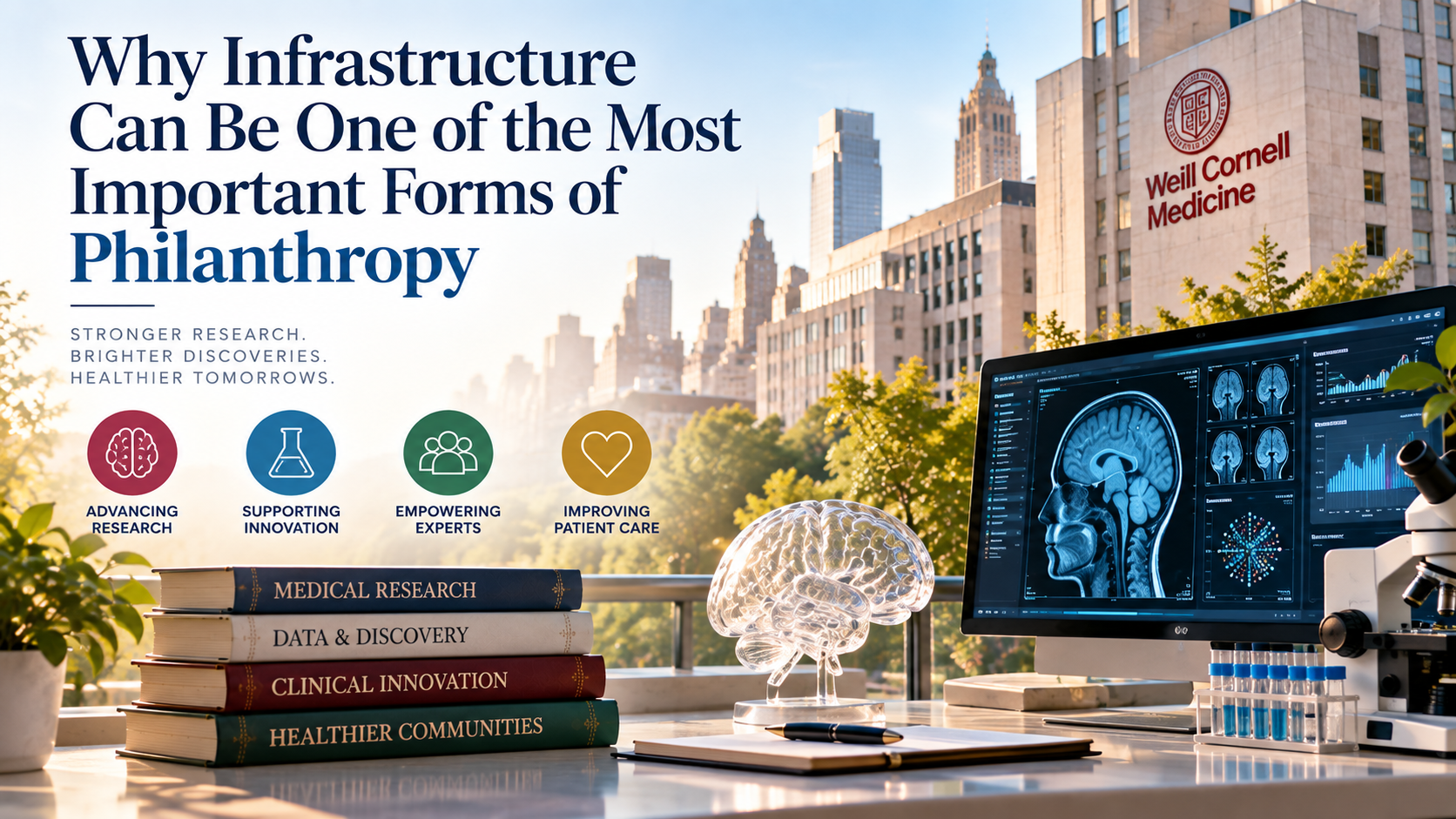
One clear example is the Weingartens’ recent gift to Weill Cornell Medicine supporting a Cognitive Neurology Research Data Repository — an initiative built to help researchers advance women’s brain health and Alzheimer’s disease studies by centralizing clinical and research data. As Bryan and Margie Weingarten have said, the goal was never to fund one project, but to empower experts to pursue bold ideas over the long term.
That same instinct shows up locally. As chairs of Aspen Valley Health’s newly formed Women’s Health Committee, Bryan and Margie are helping guide the development of a comprehensive Women’s Health Program intended to bring more integrated, patient-centered care to the Roaring Fork Valley — care that reduces the need for residents to travel outside the region for services they should be able to access closer to home.
Philanthropy That Spans Healthcare, Arts, and Civic Life
What distinguishes Aspen’s philanthropic community is how naturally giving moves across categories. The same people funding medical research are often also seated on the boards of the town’s cultural institutions, sponsoring arts education, or building investment communities rooted in shared values.
Bryan Weingarten’s own commitment to opportunity and service illustrates this pattern — a throughline connecting healthcare, education, and community leadership rather than treating them as separate lanes.
Why Local Impact Requires Local Relationships
Philanthropy that actually changes outcomes in a small mountain community depends on real relationships, not just capital. Sitting on a hospital foundation committee, serving a multi-year term on a cultural institution’s advisory council, or co-founding a values-driven investment group are all, in their own way, long-term commitments to Aspen specifically — not transferable to any other zip code.
That long-term orientation is central to building what lasts, a vision of philanthropy measured in years and decades rather than single campaigns.
What Lasting Impact Looks Like in Aspen
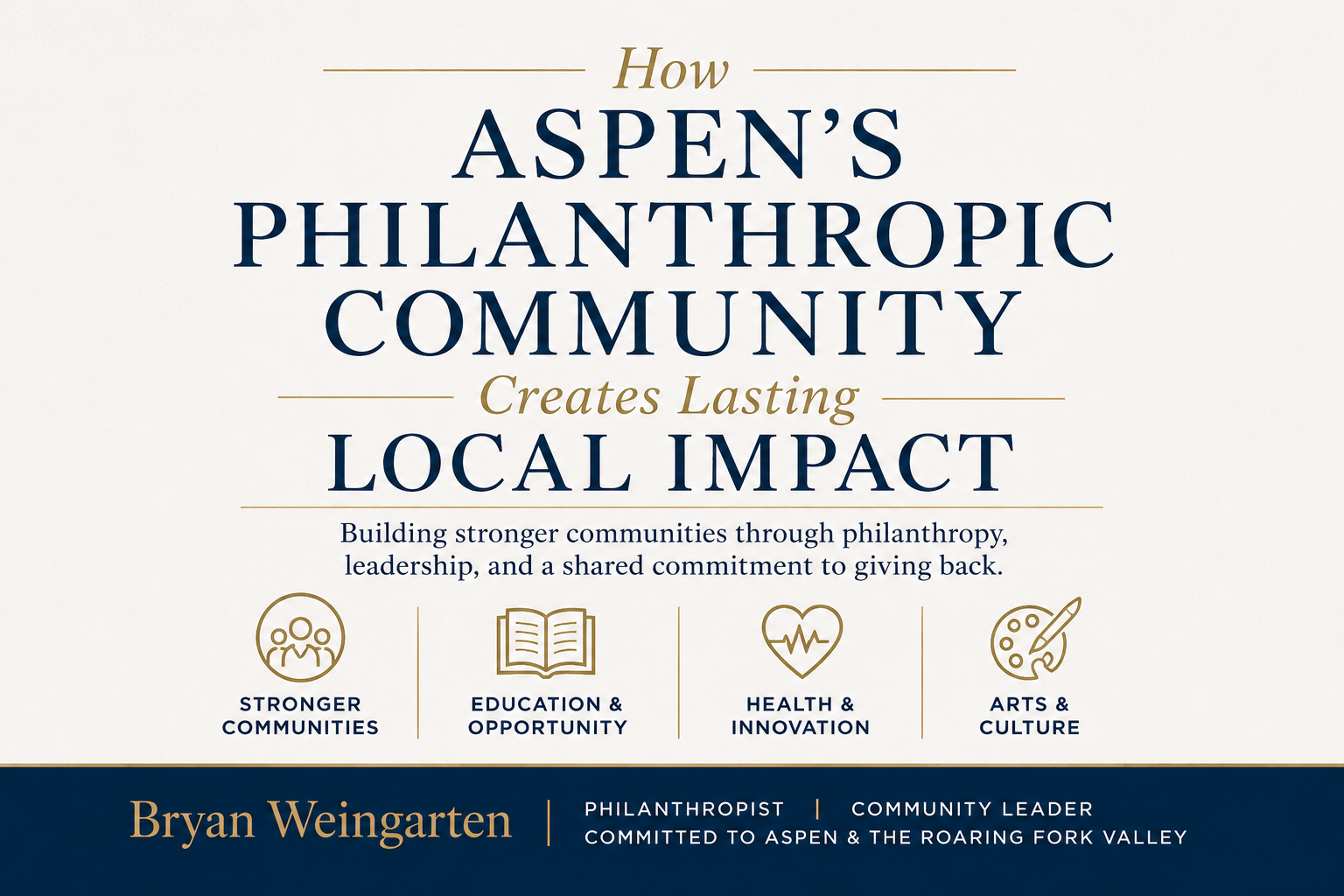
As the Roaring Fork Valley continues to grow, its philanthropic community will be defined less by any single gift and more by the accumulation of sustained, relationship-based commitments across healthcare, education, arts, and civic leadership. Aspen’s local giving culture — the kind reflected in Bryan Weingarten’s ongoing work — offers a model for what that lasting local impact can look like.

Related Posts